What to Do After a Car Accident That Wasn't Your Fault
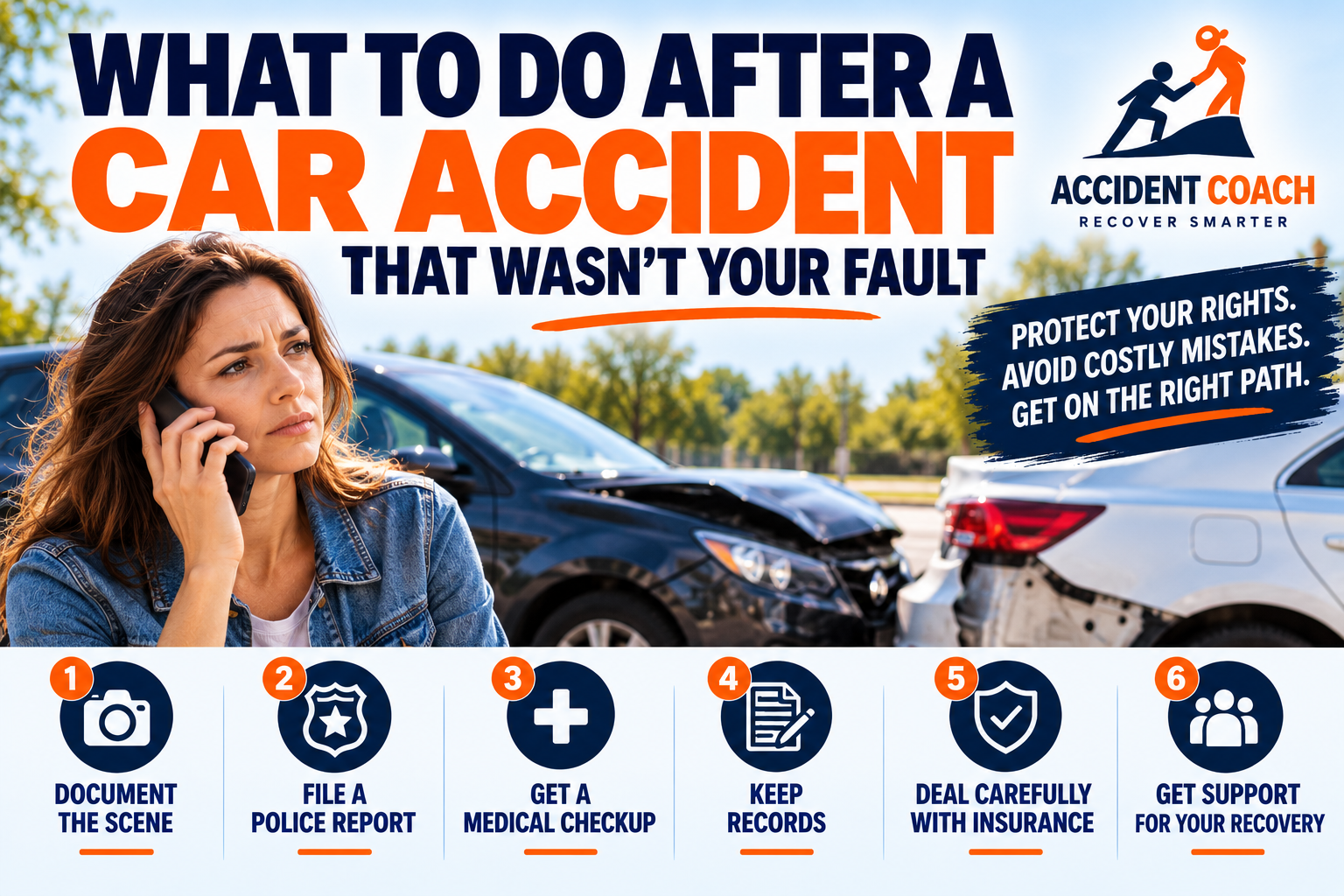
You were driving responsibly. Someone else made a mistake. Now you're dealing with vehicle damage, possible injuries, insurance companies, and expenses you never expected.
Knowing what to do after a car accident that wasn't your fault can help protect your health, your finances, and your rights.
Here are seven important steps.
1. Make Safety Your First Priority
Check for injuries and call 911 if anyone needs emergency help.
Move to a safe location if possible. Don't put yourself in danger trying to photograph the accident or move damaged vehicles.
Even if you feel fine, pay attention to symptoms that develop later.
2. Document the Accident Scene
If it's safe, take photographs of vehicle damage, license plates, road conditions, traffic signs, and the surrounding scene.
Exchange contact and insurance information with the other driver.
Get witness contact information whenever possible.
Evidence collected immediately after an accident can become extremely valuable later.
3. Report the Accident
Contact the police when required by law or when circumstances warrant it.
Explain what happened accurately without guessing or exaggerating.
Ask how to obtain the official accident report.
Remember that a police report may be important evidence, but it doesn't necessarily make the final determination of legal fault.
4. Get Medical Attention
Some injuries aren't immediately obvious.
If you're experiencing pain, dizziness, headaches, or other symptoms, seek appropriate medical evaluation. Serious or worsening symptoms may require emergency care.
Follow your healthcare professional's recommendations and keep records of appointments, treatment, prescriptions, and expenses.
Your health comes before your insurance claim.
5. Understand How Insurance Claims Work
Even when the other driver appears responsible, determining insurance liability can take time.
Depending on your state, you may need to use your own insurance coverage for certain expenses, including medical treatment.
Notify your insurer as required by your policy.
Be careful about making assumptions, giving speculative answers, or signing documents you don't understand.
An insurance adjuster's job includes evaluating the claim on behalf of the insurer. That doesn't necessarily mean their interests are identical to yours.
6. Track Your Financial Losses
An accident that wasn't your fault can still create serious financial problems.
Keep records of:
Medical bills and out-of-pocket costs
Vehicle repairs and transportation expenses
Lost wages and missed work
Prescription and rehabilitation costs
Ongoing expenses related to your injuries
Also document how the accident affects your everyday life.
Organized records can help you understand your losses and support discussions with insurers or qualified professionals.
7. Don't Rush Into a Final Settlement
A settlement offer may arrive before you fully understand the extent of your injuries or expenses.
Before accepting, consider whether future treatment, missed income, and other losses have been reasonably evaluated.
Final settlements often include releases that limit your ability to seek additional compensation later.
If injuries are serious, responsibility is disputed, or you're uncertain about your rights, consider speaking with a qualified attorney.
Legal deadlines and insurance rules vary by state.
What If the Other Driver Doesn't Have Insurance?
If the responsible driver is uninsured or underinsured, your own policy may provide certain protections.
Coverage may include uninsured or underinsured motorist benefits, personal injury protection, or other benefits depending on your policy and state.
Review your coverage carefully and ask questions about available benefits and deadlines.
Being Not at Fault Doesn't Mean Recovery Is Easy
You may have done everything right and still face months of medical appointments, financial pressure, insurance negotiations, and emotional stress.
That's why having a recovery plan matters.
At Accident Coach, we help people better understand the systems they encounter after an accident and organize their next steps.
Slow it down. Protect your position. Buy yourself time.
Recover Smarter With Accident Coach
Accident Coach provides educational tools and practical guidance to help you navigate recovery, insurance questions, financial concerns, and important decisions after an accident.
Visit accidentcoach.net to learn more.
Disclaimer: This article provides general educational information, not medical or legal advice. Insurance rules, legal rights, and reporting requirements vary by state and individual circumstances.